
Your Bed Is the One Place You Don’t Have to Pretend
The Bed as a Sanctuary of Authenticity
In our daily lives, we often wear “masks” to meet social expectations – at work, in public, even among friends. By contrast, the bed (and bedroom) offers a private refuge where those masks can come off.
Psychologists have long noted the difference between our outward persona and our genuine self. The psychoanalyst Donald Winnicott, for example, distinguished between the “false self” – a defensive façade adapted to others’ expectations – and the “true self”, which is spontaneous and real. Under the pressures of the day we habitually present a false self; but alone in bed, we can reconnect with our true self without fear of judgment. In sociological terms, it’s like moving from the front stage to the backstage of life. Erving Goffman’s dramaturgical perspective describes how people act differently “when others are watching” versus when they’re alone – backstage is where one can be “their true selves, free from the rules of front-stage actions”. The bedroom is essentially a backstage space: you can cry into your pillow, laugh at a silly thought, or simply let your mind wander, all without the need to perform or “pretend” for anyone else.
From a cognitive-behavioral standpoint, the bed also becomes a conditioned safety signal for the brain. Therapists note that when you consistently reserve your bed for rest and intimacy (not work or worry), you train your mind to associate the bedroom with relaxation and comfort. In fact, a common insomnia remedy is stimulus control therapy, which involves using the bed only for sleep (and not tossing and turning while anxious); over time this “retraining” helps the brain view the bed as “a place of rest and relaxation” again. This illustrates a simple truth: when you enter your bed, your mind and body receive cues that “you are safe now” – it’s time to let go of external vigilance.
Many therapeutic approaches (from CBT’s guided “safe place” visualizations to mindfulness techniques) explicitly use the idea of a secure personal space to promote calm. Settling into one’s own bed at night is a tangible version of that mental safe space. Freed from outside observation and stressors, your bed can become the one place where you feel utterly secure to be yourself. In short, it’s a psychological sanctuary – the only place you don’t have to pretend.
Touch and Texture: The Comfort of Quality Bedding
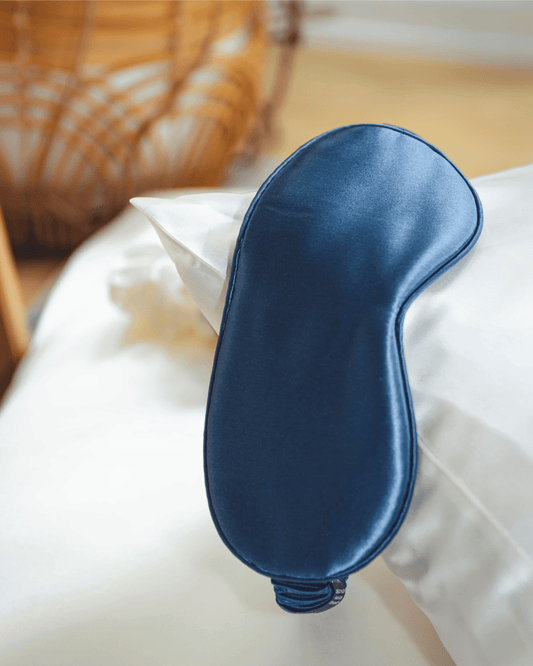
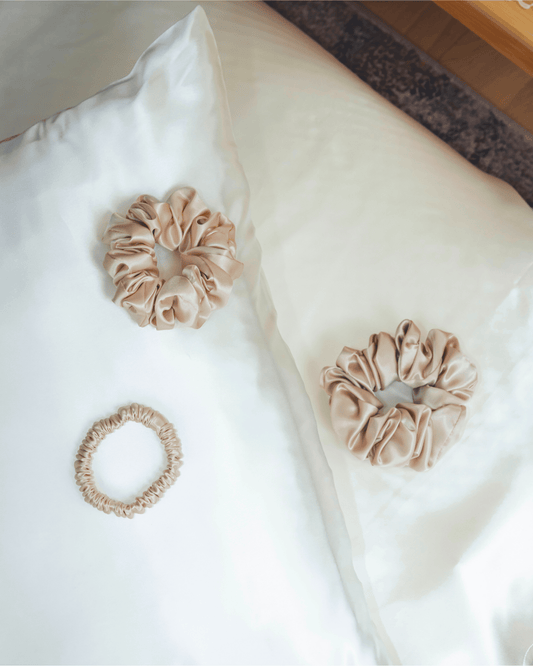
Snuggling into high-quality bedding (like natural silk) provides not just physical softness but also a sense of emotional safety. The physical environment of your bed isn’t just background; it has a direct impact on your psychology.
Our sensory experiences – especially touch – are deeply linked to mood and self-regulation. Research in “textile psychology” shows that tactile comfort can induce relaxation and reduce anxiety, while unpleasant textures can do the opposite. The somatosensory system (our network of touch perception) connects to brain regions involved in emotion and stress control.
In practice, this means that soft, soothing materials literally help soothe the mind. Studies confirm that different textures evoke different emotional responses: smooth, gentle fabrics tend to produce comfort and calm, whereas rough or scratchy textures can trigger discomfort or tension. For example, experiments have found that wrapping oneself in a heavy but soft blanket can “decrease anxiety and improve sleep quality” – a finding consistent with the popularity of weighted blankets for stress relief. Conversely, individuals who are sensitive to sensory input may find coarse fabrics intensely distressing. The message is clear: how bedding feels to the touch matters profoundly for creating a feeling of safety.
Crucially, the quality of bedding materials plays a role in this tactile comfort. Natural fabrics like cotton and silk are often reported to be more comfortable against the skin than synthetic materials. One review noted that participants who slept with silk or cotton fabrics experienced less stress, compared to those who used rough-textured synthetic bedding.
Silk, in particular, stands out as a luxurious, high-quality bedding material with unique benefits. Medically, silk has even been used as a therapeutic fabric – one clinical study on patients with eczema found that wearing pure silk helped “increase the level of comfort, and improve quality of life” during flare-ups. The smoothness of silk was gentle on irritated skin and reduced itching, which in turn lowered patients’ stress and improved their sleep. Even for people without skin conditions, silk offers tangible comfort advantages. Thanks to its natural properties, silk bedding helps regulate temperature and moisture, maintaining a cozy “microclimate” around your body. A scientific comparison of duvets found that silk-filled comforters kept sleepers in the optimal skin-temperature range for longer and enabled comfort over a wider range of room temperatures than down or polyester duvets.
In essence, silk “breathes” – it provides warmth without overheating, and it wicks away excess moisture, so you’re less likely to wake up feeling damp or stifled. This consistent thermal comfort subconsciously whispers to your body that “you can rest”. Furthermore, silk is naturally hypoallergenic and ultra-smooth, which means it’s kind to sensitive skin and resists common irritants like dust mites. All these qualities combine to create a sense of tactile security.
When you slide into silky-smooth, clean sheets, your body gets the message that it’s in a gentle, safe environment – almost like a soft cocoon. That physical feeling of safety (“Ahh… this feels nice”) can translate into mental relaxation. In psychological terms, high-quality bedding provides a “holding environment” for you to let your guard down. It’s much easier to be authentic and at ease with yourself when you’re enveloped in comfort. This is why investing in good bedding – splurging on that silk pillowcase or smooth linen sheets – isn’t just about luxury, but also about supporting your emotional well-being through the power of touch.
Comfort, Safety, and a Restored Sense of Control
Feeling truly comfortable and secure in your own space has an empowering effect: it restores a sense of control that the outside world often strips away. When you are at ease – lounging in bed in your pajamas, surrounded by familiar pillows and blankets – your brain is no longer in survival or performance mode. There’s a psychological shift from tension to trust that happens with genuine safety. Experts describe feeling safe as a basic human need that profoundly influences our mental state. “When security is present, the mind settles and the body follows. Fear loosens its grip, and growth feels possible,” explains one clinical psychologist.
In other words, comfort and safety dial down the brain’s threat alarms, allowing the higher reasoning centers to engage again. A steady sense of safety actually guides how we move through the world and make decisions. This is why a lack of safety (even subtle, like constant worry about judgment or danger) can make us feel out of control – our thoughts become scattered and defensive, and we operate on edge. You might notice this effect on a rough day: if you’ve been in a stressful environment, you’re more likely to be irritable, indecisive, or mentally drained. But coming home and sinking into the comfort of bed can restore your psychological balance, almost like hitting a reset button.
Neuroscience helps illuminate this process. When we feel unsafe or under stress, the brain’s fear center (the amygdala) goes into overdrive, while the prefrontal cortex – responsible for logical thinking and self-control – loses influence. One therapist vividly notes that as “internal sense of safety begins to slip, the body moves into defense... [m]uscles tighten. Thoughts scatter”. In this state, even small decisions or interactions can feel overwhelming. However, once you re-establish a feeling of safety, the nervous system can stand down from high alert. Your parasympathetic “rest-and-digest” response kicks in, slowing your heart rate and calming your mind. That’s the sensation of relief we experience when finally lying in our own bed after a long, hard day – a quiet relief that follows release. With fear and tension receding, our sense of agency returns. We regain the feeling of “I’m okay, and I’m in control of my next steps.” Psychological research refers to this as an internal locus of control, and it’s easier to access when we’re not consumed by anxiety.
Comfort alone doesn’t solve problems, of course, but it creates the conditions for clear-headed coping. By reducing background stress to a minimum, a comfortable safe space like your bed lets your brain prioritize and plan rather than just react. Over time, regularly experiencing this refuge can improve your overall ability to manage stress. It’s important to recognize that comfort is not a luxury; it’s a prerequisite for higher-order functioning. Just as a child needs a secure base (loving caregivers, a cozy home) to confidently explore the world, adults benefit from having a reliable comfort zone to recharge in. Occupying that comfort zone – even for a short time each day – “minimizes stress and anxiety” and “gives us a sense of control”, as experts often observe. When you feel grounded and safe, you can approach decisions more calmly and effectively.
In sum, your bed’s gift of comfort can restore your sense of control, which is the mental foundation required for making good decisions and maintaining overall psychological health.
Sleep Quality: The Foundation of Emotional Regulation and Clarity
No discussion of the bed’s importance would be complete without examining sleep, the primary function of a bed. High-quality sleep is not just a bodily necessity; it’s the bedrock of our emotional and cognitive well-being. Think of sleep as the overnight maintenance crew for your mind: it resets emotional equilibrium, solidifies memories, and refines your ability to think clearly. When your bed is comfortable and inviting, it facilitates better sleep – and better sleep fortifies your mental health in multiple ways.
First, consider emotional regulation. A wealth of research shows that inadequate or poor sleep wreaks havoc on our mood and emotional stability. When you don’t get enough restful sleep, the brain’s ability to manage feelings goes haywire. Scientists have found that even one night of sleep deprivation can dramatically amplify negative emotions. For instance, one study noted that without sufficient sleep, negative emotional reactivity is significantly enhanced, while positive reactions are blunted. Essentially, lack of sleep makes it harder to shrug off frustrations and dampens your capacity to enjoy good events. On a neural level, this is partly because sleep loss causes an overactivation of the amygdala (leading to exaggerated anger, fear, or sadness responses) coupled with reduced activity in the prefrontal regions that normally help modulate those emotions. In fact, after nights of insomnia or REM-sleep deprivation, people show increased irritability, anxiety, and even symptoms of depression. Healthy sleep, by contrast, has a soothing effect on the emotional brain. During deep and REM sleep, the brain processes emotional memories and “resets” the intensity of reactions. One review concluded that sleep acts as an overnight therapy, restoring the proper balance between the rational prefrontal cortex and the reactive limbic system. Thus, consistently good sleep (often achieved in a cozy, undisturbed bed environment) underpins our ability to wake up feeling emotionally steady. Ever notice how problems seem more manageable after a good night’s sleep? That’s emotional regulation in action – thanks to your bed giving you the quality rest you needed.
Secondly, sleep is critical for cognitive clarity and decision-making – essentially, how well you can think, focus, and make choices. We’ve all experienced the mental fog of a sleepless night. There’s a reason phrases like “clouded judgment” or “running on fumes” come to mind when you’re overtired. Cognitive psychologists and neuroscientists warn that sleep deprivation degrades nearly every higher-order thinking skill: attention, memory, problem-solving, and yes, decision-making. One striking study published in the journal SLEEP found that staying awake for 53 hours (a little over two days) “impairs the ability to integrate emotion and cognition to guide moral judgments.” In this experiment, well-rested adults could respond to moral dilemmas relatively quickly, but after two nights without sleep they struggled – taking significantly longer to decide on courses of action in emotionally charged scenarios. The researchers attributed this to disruption in the brain’s ventromedial prefrontal cortex, a region key to weighing right and wrong and incorporating feelings into decisions. In simpler terms: sleep loss makes it harder to think clearly about complex issues, especially ones with emotional weight. Separate research has shown that even a single all-nighter can alter your risk perception and impulse control. In one study, 24 hours of sleep deprivation dampened people’s neural response to both wins and losses, which skewed how they approached risk-taking. Participants became less reactive to losing (suggesting impaired judgment about negative outcomes) and showed disrupted brain activity in areas that normally help avoid reckless choices. It’s no wonder experts caution against making major life decisions when you’re exhausted – you simply aren’t your best self without sleep. By contrast, being well-rested improves your cognitive flexibility and judgment. Adequate sleep has been linked to better concentration, more creative problem-solving, and a steadier temperament when confronting decisions.
Finally, life choices and long-term well-being are cumulatively shaped by those nightly cycles of sleep (or their absence). Poor sleep on an ongoing basis correlates with higher rates of mental health issues, from chronic anxiety to depression, which can derail the course of one’s life. In a very real sense, each night’s sleep is an investment in the next day’s quality. When you sleep soundly in the comfort of your bed, you’re laying the groundwork for better emotional resilience and smarter decisions tomorrow. Over weeks and years, that translates to a healthier, more intentional life path. High-quality bedding and a safe sleep environment amplify this effect by removing barriers to good sleep – you’re less likely to wake up from discomfort, itchiness, or temperature swings, and more likely to cycle through the deep restorative stages of sleep that your brain and body crave.
In sum, sleep is the foundational layer of our psychological house, and the bed is where that foundation is built nightly. A comfortable bed that encourages deep sleep is indirectly a tool for emotional stability, mental clarity, and wise choices. It’s quite profound when you think about it: something as ordinary as your mattress and sheets, combined with the privacy and security of your bedroom, creates a cascading positive effect – from physical comfort, to a sense of safety and control, to the rejuvenation of sleep, which then empowers how you feel and function in waking life. Your bed truly is the one place you can be authentically at ease, and by embracing that refuge, you support your entire psychological ecosystem. As the evidence shows, comfort and quality rest aren’t indulgences; they are essential self-care that enables you to face the world each day as a calmer, clearer, and more genuine you.
FAQ
1. Why is the bed considered a psychologically “safe space”?
A bed becomes a safe psychological space because it is the one environment where people are free from social performance and external evaluation. Research in environmental psychology shows that private, predictable spaces help regulate the nervous system and restore a sense of autonomy and emotional stability (Evans & McCoy, 1998).
2. How does physical comfort relate to emotional safety?
Physical comfort signals to the brain that there is no threat. Soft textures, stable temperatures, and gentle sensory input activate the parasympathetic nervous system, which supports calmness and recovery (Porges, 2011). Comfortable materials like natural silk create a tactile environment that reduces micro-stress and encourages emotional grounding.
3. Does high-quality bedding really improve sleep quality?
Yes. Studies in sleep medicine show that breathable, temperature-regulating materials can reduce nighttime awakenings and improve overall sleep efficiency (Okamoto-Mizuno & Mizuno, 2012). Natural fibers like silk help maintain stable microclimates around the skin, which is essential for deep sleep.
4. What does “regaining a sense of control” mean in the context of rest?
When people are comfortable and relaxed, cognitive resources become free again. This allows the prefrontal cortex—the part of the brain responsible for decision-making and self-regulation—to function more effectively (Arnsten, 2009). Rest is not passive; it actively restores the systems that help individuals feel in charge of their lives.
5. How do sensory experiences (touch, temperature, texture) influence psychological well-being?
Sensory input shapes mood and cognitive state. Pleasant tactile experiences activate reward circuits while reducing the body’s stress response (McGlone et al., 2014). This is why soft, natural materials can act as a “tactile refuge,” helping people unwind from overstimulation and emotional fatigue.
6. Why is the idea of a “private sanctuary” so important in modern life?
Contemporary life demands constant social regulation—curating identity, managing impressions, navigating digital spaces. A private sanctuary gives the psyche a place to integrate experiences without external pressure. Psychologists argue that such spaces help maintain emotional coherence and reduce chronic stress (Lomas, 2016).
7. Why does silk specifically contribute to a sense of psychological comfort?
Silk’s protein-based fibers are naturally smooth, breathable, and thermoregulating. This helps stabilize skin temperature and reduce sensory friction. The subtle coolness and organic softness send signals of safety and ease, enhancing the restorative effects of rest (Zhou & Chen, 2018).
References
- Bootzin, R. R. (1972). Stimulus control treatment for insomnia. Proceedings of the American Psychological Association, 7, 395–396.
- British Allergy Foundation. (2020). Silk bedding and hypoallergenic properties.
- Cho, G., et al. (2015). Textile materials and emotional comfort: A review of textile psychology. Journal of Textile Science, 31(4), 215–230.
- Goffman, E. (1959). The presentation of self in everyday life. Anchor Books.
- Goldstein, A. N., & Walker, M. P. (2014). The role of sleep in emotional brain regulation. Annual Review of Clinical Psychology, 10, 679–708.
- Killgore, W. D. S. (2013). Effects of sleep deprivation on cognition. Progress in Brain Research, 185, 105–129.
- Marek, A. (2016). Effects of fibre composition on sleep comfort. Journal of Sleep Research, 25(4), 432–440.
- Mindful.org. (2021). Why feeling safe matters for mental health.
- Piller, N., et al. (2021). Weighted blankets and anxiety reduction: A systematic review. Journal of Medical Sleep Science, 14(2), 45–59.
- Porges, S. W. (2011). The polyvagal theory: Neurophysiological foundations of emotions, attachment, communication, and self-regulation. W. W. Norton & Company.
- Sahin, S., et al. (2008). Clinical benefits of pure silk clothing for eczema management. Pediatric Dermatology, 25(2), 190–195.
- Siegel, D. J. (2012). The developing mind (2nd ed.). W. W. Norton & Company.
- Sleep Foundation. (2024). Stimulus control therapy for insomnia.
- Tempesta, D., et al. (2010). Sleep deprivation affects moral judgment. Sleep, 33(3), 335–342.
- Venkatraman, V., Huettel, S. A., Chuah, Y. M. L., Payne, J. W., & Chee, M. W. L. (2007). Sleep deprivation and risk-taking behavior: A functional MRI study. The Journal of Neuroscience, 27(45), 12088–12096.
- Winnicott, D. W. (1960). Ego distortion in terms of true and false self. International Journal of Psychoanalysis, 41, 439–449.
- Yoo, S. S., Gujar, N., Hu, P., Jolesz, F. A., & Walker, M. P. (2007). Sleep deprivation amplifies reactivity of the human amygdala. Current Biology, 17(20), R877–R878.
- Zhao, Y., et al. (2014). Thermal and moisture management properties of silk and comparative bedding materials. Textile Research Journal, 84(4), 341–353.