
Silk vs Polyester: The Truth About Long‑Term Cost and Value
Silk looks expensive.
Polyester looks clever.
One feels like a luxury.
The other feels like a “smart budget choice”.
But that first impression hides a deeper truth.
When you look at long‑term value, comfort, and environmental cost, 100% mulberry silk and polyester belong to very different worlds.
This article is not about attacking polyester.
It is about seeing the full picture.
So you can choose what really makes sense for your body, your home, and your future.
The Price Tag Is Only the First Line of the Story
On day one, polyester almost always looks cheaper.
A polyester pillowcase or duvet cover can cost a fraction of a silk one.
Many shoppers stop there.
But the true cost of a fabric is not only:
- what you pay at checkout
- it is how long it lasts
- how it feels every single night
- what it does to your skin and hair
- and what it leaves behind in the world
Silk is often more expensive at the start.
Silk is usually better value over time.
How Silk and Polyester Age in the Real World
Silk and polyester age in very different ways.
Polyester over time
Polyester is a plastic fibre.
It is strong in some ways but weak in others.
Over time, polyester:
- can pill and look worn
- can hold onto odour and sweat
- can trap heat and make you feel clammy
- can build static and cling to skin and hair
Many people end up replacing polyester bedding every few years.
Sometimes sooner, because it no longer feels comfortable or looks fresh.
Silk over time
High‑quality mulberry silk is a long, continuous filament.
It has a natural strength when treated well.
Over time, silk:
- keeps a smooth, soft surface
- resists pilling when washed gently
- stays breathable and temperature‑balancing
- often looks even more “lived‑in” in a beautiful way
A good silk pillowcase or duvet cover can last for many years with proper care.
In a slow luxury mindset, this matters more than the price of a single season.

Cost Per Use: A Different Way to Think About Value
Fast fashion trains us to think in single purchases.
Slow luxury thinks in cost per use.
Imagine two pillowcases:
- a polyester pillowcase that feels okay at first
- a silk pillowcase that feels exceptional every night
If the polyester one is used for a short period and then replaced, and the silk one is used for many years, the “cost per night” difference shrinks.
Now add everything that cost per night does not show:
- the quality of your sleep
- the condition of your skin and hair
- the amount of frustration when you overheat or wake up sweaty
- the emotional comfort of a natural, breathable surface
Cheap can become expensive when it does not truly support you.
More expensive can become generous when it holds you well for a long time.
Comfort Has Value You Can Feel Every Morning
You spend one third of your life in bed.
That time shapes the rest of your life.
How silk changes sleep comfort
Silk is:
Silk helps reduce:
- overheating at night
- friction on your face and hair
- irritation for sensitive or reactive skin
You may wake up:
- less puffy
- less creased
- less frizzy
- and less tired
These are not abstract benefits.
You see them in the mirror.
You feel them in your mood.
How polyester feels in comparison
Polyester does not breathe like silk.
It tends to:
- trap heat
- hold sweat
- build static
On a warm night in London or Berlin, polyester can feel like a plastic bag.
You may toss, turn, and wake more often.
You can ask a simple question:
What is the value of a calmer morning?
The Hidden Environmental Cost of Polyester
Price tags rarely include environmental cost.
But the planet pays it anyway.
Polyester
Polyester is made from fossil fuels.
It is a synthetic plastic fibre.
Each wash of polyester:
- can release microplastic fibres into water
- these fibres end up in rivers, lakes, and oceans
- they do not biodegrade
Old polyester bedding and clothing often end up in landfill.
They break into smaller pieces, but they do not truly return to nature.
Silk
Mulberry silk is a natural protein fibre.
Responsibly farmed silk:
- comes from mulberry trees and silkworms
- is biodegradable
- does not shed microplastics
At the end of its life, silk can break down and return to the soil.
Silk fits into a circular, slower story.
When you choose silk over polyester, you do not just change your bed.
You change the trace your bed leaves behind in the world.
Maintenance, Care, and the Emotion of Owning Things Longer
One common belief is that silk is “too delicate” and polyester is “easy”.
The truth is more nuanced.
Caring for polyester
Polyester can handle higher heat and rougher washing.
But every rough wash moves it closer to:
- pilling
- fading
- losing its shape
Many people treat polyester as disposable.
When it looks tired, they simply buy another piece.
This cycle is its own cost.
Caring for silk
Silk asks for more gentleness.
It prefers:
- cool water
- mild detergent
- air drying
But with that care, silk stays beautiful for years.
You build a relationship with the object.
Slow luxury is not about having many things.
It is about keeping the right things for a long time.
There is also a subtle psychological effect.
When you own objects that you care for, you practice respect.
Respect for the object.
Respect for your own body.
Respect for the resources that made it.
That practice has value.
Silk vs Polyester: A Long‑Term Value Snapshot
You can think of it like this:
Polyester
- Lower upfront cost
- Higher hidden environmental cost
- Higher replacement frequency
- Lower comfort on hot or humid nights
- Feels like plastic, because it is plastic
Silk
- Higher upfront cost
- Lower long‑term environmental impact
- Longer potential lifespan with care
- Higher comfort across seasons
- Feels like a natural extension of your own skin
When you add all these layers, silk is not just “more expensive fabric”.
Silk is a different philosophy of value.
How to Start Moving from Fast Plastic to Slow Silk
You do not need to replace everything at once.
You can start with the surfaces that touch you the most.
For example:
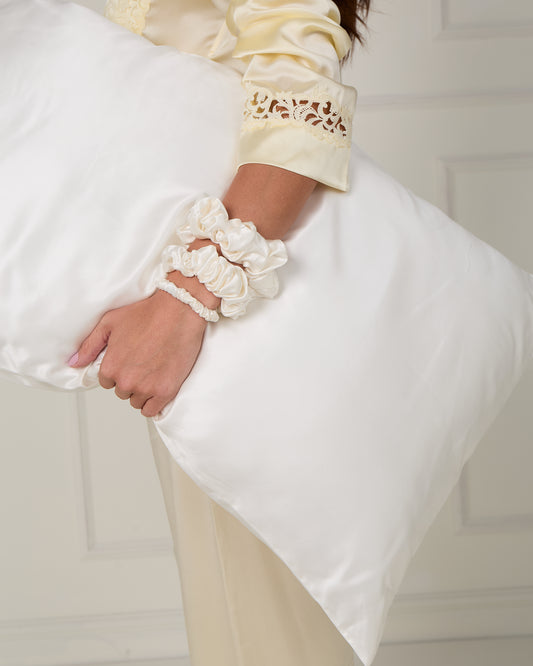
- a silk pillowcase for your face and hair

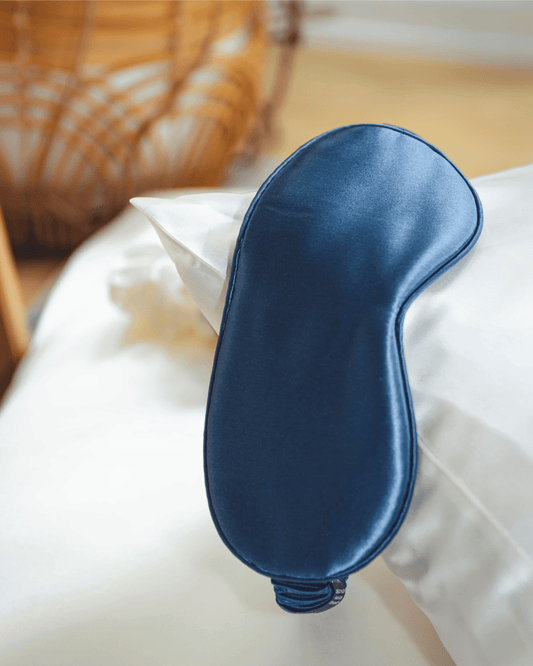
- a silk eye mask for darkness and comfort

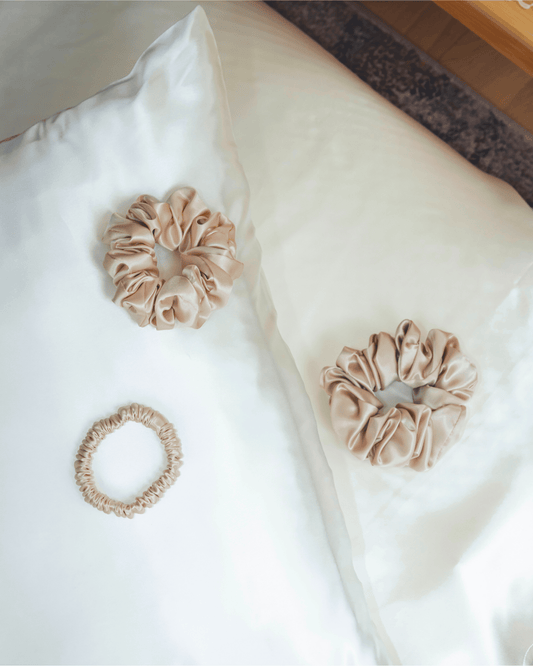
- a silk scrunchie to protect your hair overnight

These are small entry points into slow luxury.
They shift both your tactile experience and your daily rhythm.
Conclusion: Cheap vs Valuable Are Not the Same
Silk vs polyester is not just a fabric comparison.
It is a story about time, care, and consequence.
Polyester is cheap in the moment.
Silk is generous over years.
Polyester is easy to buy and easy to throw away.
Silk invites you to slow down, choose carefully, and keep things longer.
In the long run, value is not only what you pay.
Value is what supports your body, your sleep, your environment, and your sense of self.
When you think in years, not weeks, silk stops being a luxury you “treat yourself to”.
Silk becomes a wise, grounded choice for the one‑third of life you spend in bed.
FAQ: Silk vs Polyester – Long-Term Cost and Value
Is polyester always cheaper than silk?
At the first purchase, yes. Polyester usually has a lower price tag than 100% mulberry silk. But when you look at how long each fabric lasts and how it feels over time, silk often offers better value per year of use.
Does silk really last longer than polyester?
High-quality mulberry silk can last for many years with gentle care. Polyester can handle rougher washing but often pills, looks worn, and feels less pleasant much sooner. Many people replace polyester more often, which increases its real cost over time.
Is silk worth the higher price?
If you care about comfort, skin and hair health, and long-term use, yes. Silk is breathable, temperature-balancing, and gentle on skin and hair. When you divide the cost by years of use and nightly comfort, silk becomes a strong value choice, not just a luxury.
How does silk feel different from polyester when sleeping?
Silk feels cool at first, then warm and balanced. It allows air and moisture to move, so your body stays more comfortable through the night. Polyester tends to trap heat and sweat, especially in warm rooms, which can make sleep feel restless or sticky.
Is polyester bad for the environment?
Polyester is a synthetic plastic fibre made from fossil fuels. It does not biodegrade and sheds microplastic fibres during washing. These microplastics end up in rivers and oceans. Over time, this creates a significant environmental cost that the price tag does not show.
Is silk more sustainable than polyester?
Silk is a natural protein fibre. When produced responsibly, it is biodegradable and does not release microplastics. It also tends to be used and valued for longer. While no material is perfect, silk fits better with a slow, lower-impact lifestyle than fast synthetic fabrics.
Is silk very hard to care for?
Silk prefers gentle care, but it is not as fragile as many people think. Cool water, mild detergent, and air drying are usually enough. With this routine, silk can stay smooth and beautiful for years. Polyester tolerates harsher washing but often looks tired sooner.
How can I start switching from polyester to silk without replacing everything?
Begin with what touches you the most. A silk pillowcase is a simple first step. You can add a silk eye mask or scrunchie next. These small changes let you feel the difference in comfort and value before you fully commit.
References
- Astudillo, M. F., Thalwitz, G., & Vollrath, F. (2014). Life cycle assessment of Indian silk. Journal of Cleaner Production, 81, 158–167.
- Barcelos, S. M. B. D., Salvador, R., Guedes, M. G., & de Francisco, A. C. (2020). Opportunities for improving the environmental profile of silk cocoon production under Brazilian conditions. Sustainability, 12(8), 3214.
- Cosetex. (n.d.). Silk: A natural biodegradable textile fiber. Retrieved December 5, 2025, from
- Gonzalez, V., Lou, X., & Chi, T. (2023). Evaluating environmental impact of natural and synthetic fibers: A life cycle assessment approach. Sustainability, 15(9), 7670.
- Li, M., Liu, Y., & Jing, L. (2024). Biodegradation behavior of silk-based materials. In S. Kundu (Ed.), Silk-based biomaterials for tissue engineering, regenerative and precision medicine (2nd ed., pp. 361–384). Woodhead Publishing.
- Palacios-Mateo, C., van der Meer, Y., & Seide, G. (2021). Analysis of the polyester clothing value chain to identify key intervention points for sustainability. Environmental Sciences Europe, 33(2).
- Volgare, M., De Falco, F., Avolio, R., Castaldo, R., Errico, M. E., Gentile, G., Ambrogi, V., & Cocca, M. (2021). Washing load influences the microplastic release from polyester fabrics by affecting wettability and mechanical stress. Scientific Reports, 11, 19479.
- Weston Manufacturing. (n.d.). Is silk fabric biodegradable? The scientific truth about nature’s luxury fiber. Retrieved December 5, 2025.