
Real Silk vs Satin: 7 Easy Tests
Silk is prized as a luxurious, natural fabric – but not everything labelled “silk” is the real deal. Many products on the market called “silky” or “satin” are actually made of synthetic materials like polyester or rayon. Knowing how to spot genuine natural silk versus synthetic silk (fake silk) is important.
In this guide, you’ll learn how to spot real natural silk from synthetic alternatives—and why it matters, especially when it comes to sleepwear.
 Explore 100% Mulberry Silk Essentials
Quick Comparison Table: Real vs Synthetic Silk
| Feature | Real Silk | Synthetic Silk |
|---|---|---|
| Made From | Silkworms | Petroleum chemicals |
| Texture | Soft, breathable, luxurious | Slippery, less breathable |
| Temperature | Regulates well | Traps heat |
| Skin Sensitivity | Hypoallergenic | May cause irritation |
In short, being able to tell real vs fake silk means you can shop smarter, care for your items properly, and enjoy all the benefits that authentic silk provides.
How to Identify Real Silk vs. Fake Silk
By checking multiple factors, you’ll gain confidence in telling apart true silk and imposters.
1.Read the Label or Description Carefully:
Real silk products will typically say things like “100% silk”, “100% mulberry silk”, or specify the grade and momme weight (e.g. “22-momme Grade 6A silk”). Genuine silk is proud of its pedigree.
In contrast, synthetic silk items often avoid outright calling themselves silk on the fiber content. Instead, you might see terms like “polyester satin,” “silky feeling,” “artificial silk,” or obscure names like “viscose” or “rayon”. If the material content isn’t clearly listed, that’s a red flag.
2. Consider the Price Point:
Price can be a strong hint.
Real silk is costly to produce due to labor-intensive processes and silkworm farming. If a "silk" item is unusually cheap, it’s likely synthetic.
Artificial silk (like polyester or rayon) often costs 10x less than real silk. A high price isn’t a guarantee, but genuine silk is rarely found at a bargain. Always check the material label when the price seems too good to be true.
3. Look at the Fabric’s Shine:
One of the easiest ways to spot real silk is by how it reflects light.
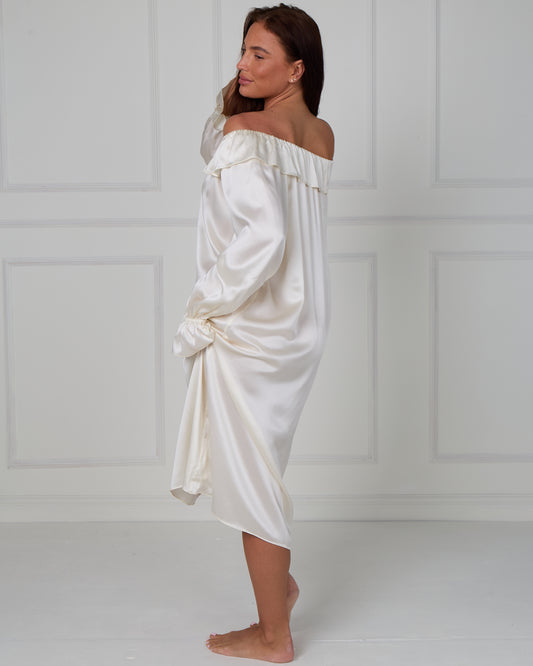
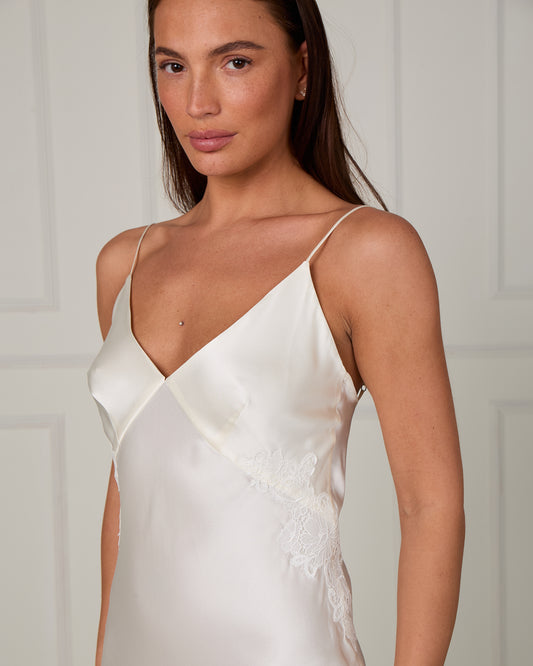
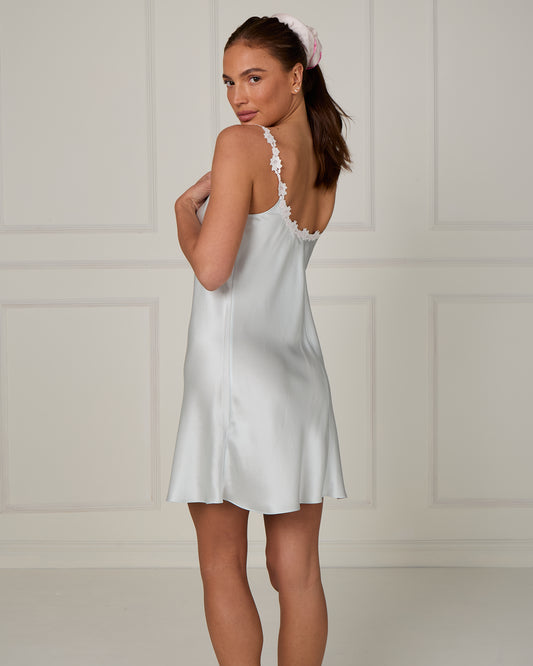
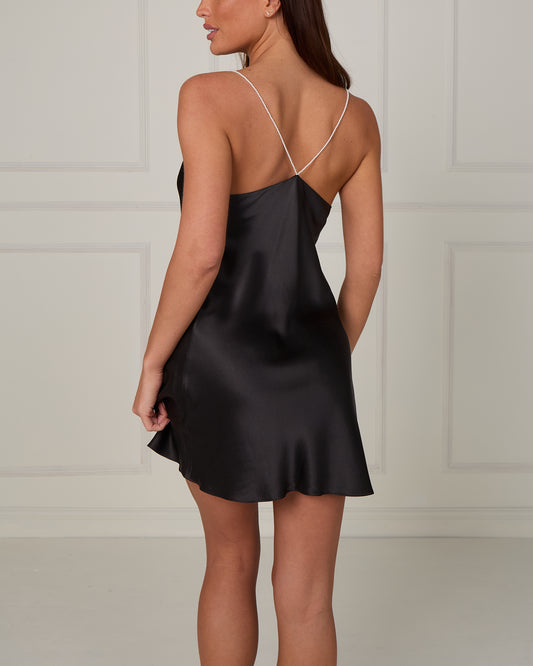
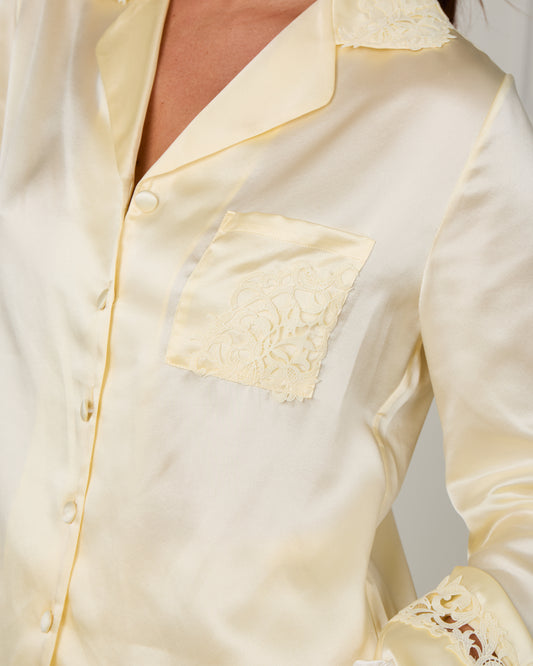
Real silk has a soft, elegant sheen that changes slightly depending on the light and angle—think of a gentle, multi-toned glow. It’s never overly glossy or shiny.
Synthetic silk (like polyester satin) usually has a flat, bright shine that looks the same from all angles. It can appear too white or plastic-like, and the gloss is often too strong.
Quick test: Hold the fabric up to light and move it.

4. Feel the Texture and Weight:
Touch is one of the best ways to tell real silk.
Natural silk has a smooth, fluid texture—cool to the touch at first, then gently warming with your skin. It feels neither sticky nor overly slick, but carries a soft resistance often described as “buttery.” When lightly scrunched, it makes a faint, crisp sound known as the “silk whisper” or “silk scoop”—a quiet sign of authenticity.
Its drape is light yet confident, flowing without clinging. The fabric rests with ease, adapting to your movement rather than resisting it.
In contrast, synthetic silk often feels overly glossy or slippery. It stays cool in the hand, lacks warmth, and tends to hang stiffly or unnaturally. There’s no audible texture when touched—no subtle rustle, no life in the fiber.
Seasoned silk wearers say real silk glides and breathes with you. It doesn’t just lie on the skin—it listens to it.
5. Check for Imperfections or Weave Variations:
This tip can be a bit tricky, but it’s worth noting.
Natural silk, especially when handwoven or less processed, may show tiny variations—subtle bumps, slubs, or shifts in thread thickness. These are not flaws, but quiet signs of authenticity. Fabrics like wild silk or raw silk may feel slightly textured, while charmeuse silk is more even and fluid.
By contrast, synthetic fabrics often appear overly uniform. A completely flawless, plastic-smooth surface might suggest it’s man-made. This alone isn't a guarantee—but when combined with touch, shine, and drape, it helps complete the picture.

Crafted from 22-momme mulberry silk
6.The Ring Test (Fabric Sliding Test):
This classic test involves sliding a piece of fabric through a smooth ring, like a wedding band.
- Real silk is fine enough to glide through easily, thanks to its soft, smooth texture.
- Synthetic silk may snag or resist, especially if it's thicker or less refined.
Note: Heavier silk or certain weaves may not pass through smoothly. Treat it as a light, optional check—not a guarantee.

7.The Burn Test (with Caution!):
If you have a spare thread, a quick burn test can help tell real silk from synthetic.
Real silk burns slowly, self-extinguishes, and smells like burnt hair. It leaves behind soft, crumbly ash that turns to powder when touched.
Fake silk (like polyester satin) burns quickly, shrinks from the flame, and smells like plastic. It forms a hard, glossy bead — not ash — and keeps burning unless extinguished.
✦ Always test scraps, never finished garments. This method is destructive and best used as a last resort.

If you’re passionate about silk, be sure to learn more about it. We invite you to explore our other blog posts to deepen your silk know-how. Find out why ethically farmed silk is an eco-friendly choice (spoiler: no microplastics and sustainable farming) and discover what makes 100% mulberry silk from Suzhou the best of its kind. You’ll gain appreciation for the craftsmanship and care behind genuine silk. And if you do pick up some lovely silk items, check out our Silk Care Guide for tips on keeping them in top condition for years – real silk is an investment, and with proper care it will last beautifully.
FAQ: Natural Silk vs. Synthetic Silk
1. Why do natural silk and synthetic silk feel so different?
Because it’s made of protein fibers from silkworms, which interact with light and skin differently than synthetic materials like polyester.
2. How can I tell if something is real silk at home?
Look for a soft, non-glossy shine and slight irregularities. Real silk burns slowly and smells like hair; synthetics melt and smell like plastic.
3. Is synthetic silk always cheaper?
Usually, yes. It’s machine-made at lower cost, while real silk involves labor-intensive natural production.
4. Is synthetic silk bad for the skin?
Not always harmful, but it traps heat and moisture. Real silk is breathable and gentler, especially for sensitive skin.
5. Why does real silk have that soft, pearly glow?
Its natural triangular fibers refract light softly—unlike synthetics, which reflect light in a flatter, overly shiny way.
6. Can synthetic silk ever match the quality of real silk?
It can look similar, but lacks the feel, breathability, and graceful movement of true mulberry silk.
7. Why do brands sometimes label polyester as ‘silky’?
“Silky” describes texture, not content. Always check the label for “100% silk” or “Mulberry silk.”
8. Is mulberry silk different from other types of real silk?
Yes—it's the highest grade, with the longest, smoothest fibers. Other silks like Tussah are rougher and less uniform.